
Choosing the wrong circular saw wastes money and slows your work – the wrong blade size limits your cut depth, and a poorly balanced tool causes fatigue on long jobs. This guide focuses on three DEWALT circular saws covering both cordless and corded options, from the compact 20V MAX DCS391B to the 7-1/4-inch corded DWE575SB with its 57° bevel capacity, so you can match the right tool to how you actually work. Whether you’re cutting framing lumber on a job site without outlet access or ripping sheet goods in a shop, the differences between these models come down to power source, bevel range, and weight – and those details matter more than brand loyalty.
Quick Comparison
| # | Product | Key Features | Score | |
|---|---|---|---|---|
| 1 |
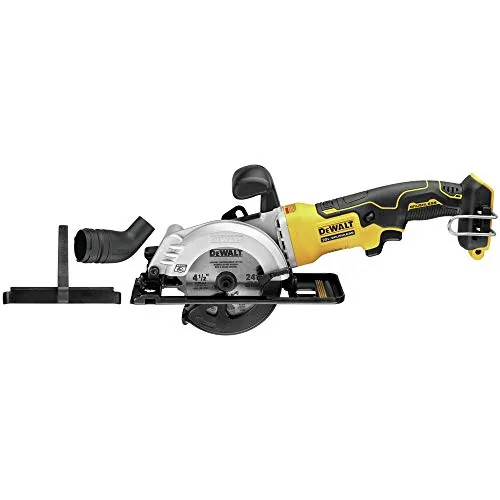
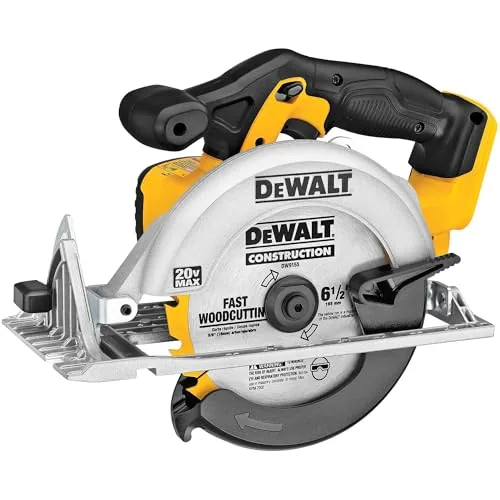
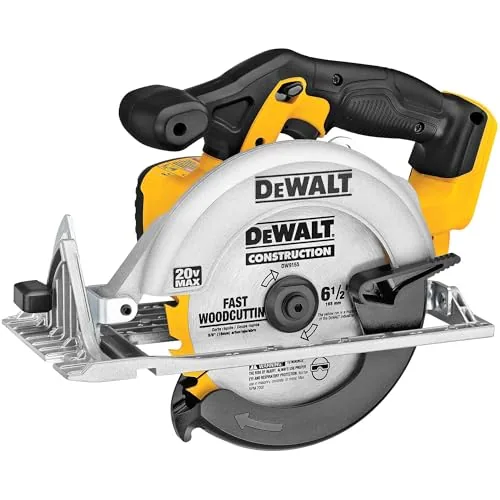 DEWALT DCS391B 20V MAX 6-1/2-in Cordless Circular Saw
 |
|
8.5 ★★★★☆ | Read full review ↓ |
| 2 |
 DEWALT DWE575SB 7-1/4in Circular Saw, 57° Bevel
 |
|
8.5 ★★★★☆ | Read full review ↓ |
| 3 |
 DEWALT DWE575 7-1/4-In Circular Saw, 8.8 lb
 |
|
8.5 ★★★★☆ | Read full review ↓ |
| 4 |
 Skil 5080-01 13-Amp 7-1/4 Circular Saw
 |
|
8.2 ★★★★☆ | Read full review ↓ |
| 5 |
 SKIL 5280-01 15-Amp 7-1/4" Circular Saw with Laser
 |
|
7.5 ★★★★☆ | Read full review ↓ |
| 6 |
 DEKOPRO 1200W Circular Saw with Guide Rail
 |
|
7.5 ★★★★☆ | Read full review ↓ |
| 7 |
 GALAX PRO 11A Circular Saw 185mm Blade 1400W
 |
|
7.2 ★★★★☆ | Read full review ↓ |
DEWALT DCS391B 20V MAX 6-1/2-in Cordless Circular Saw
The DCS391B runs at 5150 RPM and cuts bevels up to 50 degrees, covering most framing and finish cuts a carpenter needs on a cordless platform. The magnesium shoe keeps weight down without sacrificing the rigidity required for repeatable straight cuts. At $90 body-only, it fits cleanly into any existing 20V MAX battery setup.
Key Features
- 5150 RPM motor for high-speed cuts through demanding materials
- Magnesium shoe is lightweight yet rigid for long-term cut accuracy
- Rubber over-molded grip improves balance and hand control
- 0 to 50 degree bevel capacity handles a wide range of bevel cuts
✅ Pros
- 5150 RPM output handles hardwood and engineered lumber without bogging
- Magnesium shoe reduces tool weight compared to aluminum or steel alternatives
- 50-degree bevel range covers crown molding and aggressive compound cuts
- Body-only pricing makes it cost-effective for users already on 20V MAX
❌ Cons
- Battery and charger sold separately, adding $50 to $100 for new users
- No electric brake, which slows blade coast-down compared to higher-tier models
Why We Chose It
The DCS391B delivers a strong RPM figure and a wide bevel range at a price point that undercuts many competing cordless saws in this class. The magnesium shoe is a practical material choice that holds a straighter cut line over time compared to plastic-base alternatives. It integrates into the broad 20V MAX ecosystem, which makes battery sharing across a tool collection straightforward.
Perfect For
Contractors or serious DIYers already invested in the DEWALT 20V MAX platform who need a reliable, lightweight circular saw for framing, sheathing, or trim work.
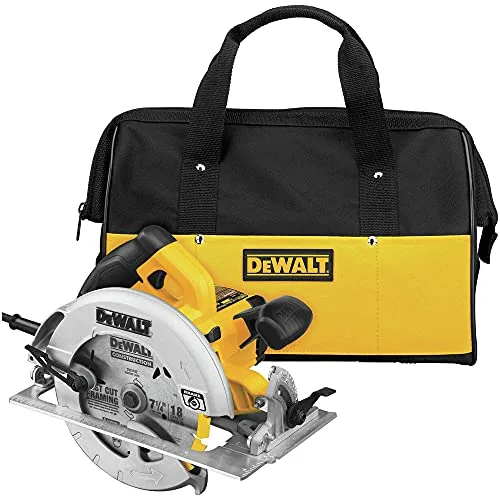
DEWALT DWE575SB 7-1/4in Circular Saw, 57° Bevel
At 8.8 lbs, this is one of the lightest 7-1/4 inch corded saws available without sacrificing the 15-amp motor output most job sites require. The 57-degree bevel range with preset stops at 22.5 and 45 degrees covers the cuts that come up most often in framing and finish work. The electric brake cuts blade spin-down time significantly, which matters when you are moving quickly between cuts.
Key Features
- Weighs 8.8 lbs, among lightest in its class
- Electric brake stops blade immediately after trigger release
- 15-amp motor handles demanding cuts in dense materials
- 57-degree bevel capacity with stops at 45 and 22.5 degrees
- 2 9/16-inch maximum depth of cut
- Ball bearing lower guard rated for harsh job site conditions
- High-grade aluminum base plate for flat accurate cuts
- Lower guard design improves clearance during bevel and shim cuts
✅ Pros
- 8.8 lb weight reduces fatigue during extended overhead or one-handed use
- Electric brake adds measurable safety margin between cuts
- 57-degree bevel range exceeds the 45-degree limit found on many competitors
- Aluminum base resists warping and slides cleanly on rough lumber
❌ Cons
- Corded only, so cord management is a constant consideration on large sites
- 2 9/16-inch depth of cut falls short for cutting through doubled 2x material in a single pass
Why We Chose It
The DWE575SB hits a useful balance between weight and power that most mid-range saws miss, either running heavier motors or underpowered lightweight frames. The extended 57-degree bevel and ball-bearing lower guard are details that point to practical jobsite durability rather than spec-sheet padding. At $140, it undercuts several comparable saws from other brands without removing the electric brake or trimming the bevel range.
Perfect For
Framers, trim carpenters, and serious DIYers who work corded and want a lightweight saw with a full-range bevel and fast blade stop.
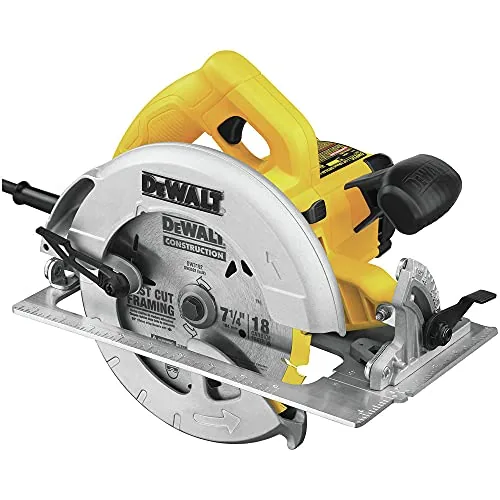
DEWALT DWE575 7-1/4-In Circular Saw, 8.8 lb
At 8.8 lbs, the DWE575 is one of the lightest 7-1/4-inch corded saws available, which reduces fatigue on full-day framing or decking jobs. The 15-amp motor and 53-degree bevel capacity handle rip cuts, angle cuts, and thick lumber without bogging down. For $129, it delivers contractor-grade build quality at a price that works for serious DIYers.
Key Features
- 15-amp motor handles demanding cuts in thick lumber
- Weighs 8.8 lbs, among the lightest in its class
- 53-degree bevel capacity with stops at 45 and 22.5 degrees
- 2-9/16-inch depth of cut for versatile material thickness
- Ball bearing lower guard resists snag in harsh conditions
- Reinforced cord construction resists pull-out damage
- Integrated dust blower keeps cut line visible during use
- High-grade aluminum base provides a flat, accurate cutting surface
✅ Pros
- 8.8 lb weight noticeably reduces arm fatigue on long cutting sessions
- 15-amp motor maintains speed through hardwood and engineered lumber
- 53-degree bevel range covers most framing and finish carpentry angles
- Dust blower keeps the cut line clear without requiring a separate tool
- $129 price point is competitive for a saw with these specs
❌ Cons
- Corded design limits mobility when working far from a power source
- No laser guide included, which some competitors offer at this price
Why We Chose It
The DWE575 earns its place on this list because it hits a specific gap: full-size cutting power in a frame that weighs under 9 lbs. The aluminum shoe and ball-bearing guard are details that hold up over years of use, not just in early reviews. The price sits below comparable Makita and Skilsaw models with similar motor ratings.
Perfect For
Carpenters, framers, and serious DIYers who use a circular saw daily and want to cut fatigue without stepping down to an underpowered saw.
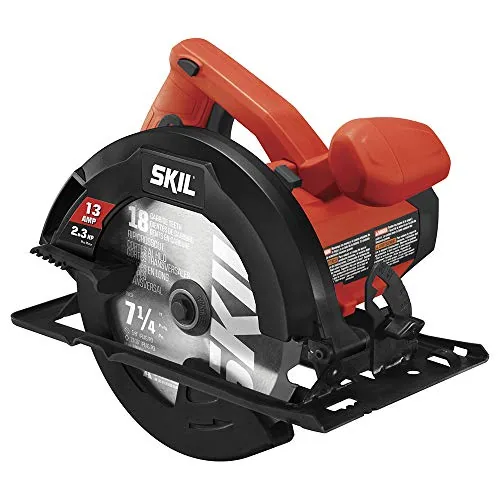
Skil 5080-01 13-Amp 7-1/4 Circular Saw
The Skil 5080-01 delivers 13 amps of cutting power in a lighter package than its predecessor, making it easier to handle on longer jobs. The 51-degree bevel capacity and spindle lock cover most cutting tasks a DIYer or weekend renovator will run into. At $44, it sits in a price range where most budget saws cut corners on motor or ergonomics, and this one avoids both.
Key Features
- 13-amp motor outperforms the 5380 model
- 15% lighter than previous model, reduces arm fatigue
- 51-degree bevel with preset positive stops
- Spindle lock speeds up blade swaps
- Dust blower clears sawdust from cut line
✅ Pros
- 13-amp motor is strong for the $44 price point
- Lighter build reduces fatigue during extended cuts
- 51-degree bevel range handles angled cuts beyond standard 45 degrees
- Integrated dust blower keeps cut line visible without a vacuum hookup
❌ Cons
- No laser guide or cut indicator, so layout lines matter more
- Plastic construction in some areas reflects the budget price
Why We Chose It
The 5080-01 gives a meaningful motor and weight upgrade over the older 5380 without moving the price. The 51-degree bevel capacity and spindle lock are practical additions that you would normally find on saws costing more. For a primary entry-level saw or a backup on a job site, the value per dollar is hard to argue with.
Perfect For
DIYers and homeowners who need a reliable everyday circular saw for framing, decking, or trim work without spending over $50.
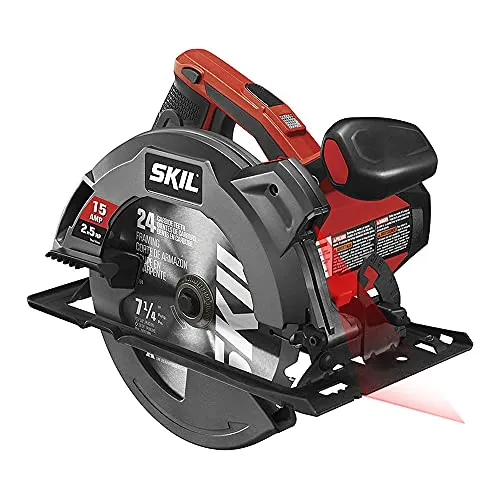
SKIL 5280-01 15-Amp 7-1/4" Circular Saw with Laser
At $59, this 15-amp circular saw covers the basics that most DIYers and light contractors need daily. The single-beam laser guide and dust blower address two common frustrations with budget saws: drifting cuts and obscured cut lines. The 51-degree bevel range with a 45-degree positive stop adds genuine versatility for framing, trim, and sheet goods.
Key Features
- 15-amp motor spins blade at 5,300 RPM for fast cuts
- 7-1/4-inch carbide-tipped blade included with spindle lock
- 51-degree bevel capacity with positive stop at 45 degrees
- Dust blower clears sawdust from the cut line during use
- Safety lock trigger and power-on indicator reduce accidental starts
✅ Pros
- 15-amp motor is strong for a saw in this price range
- Laser guide improves straight-line accuracy without a chalk line
- Dust blower keeps the cut line visible throughout the cut
- 51-degree bevel range handles most angled cuts a DIYer needs
❌ Cons
- Single-beam laser can drift out of calibration with regular use
- Build quality reflects the $59 price point, not suited for daily job-site abuse
Why We Chose It
The SKIL 5280-01 delivers a laser guide and dust blower at a price where most competitors offer neither. The 15-amp motor matches mid-range saws that cost significantly more. For occasional home projects and weekend work, it earns its place without requiring a large upfront investment.
Perfect For
Homeowners and occasional DIYers who need a reliable circular saw for weekend projects like deck boards, plywood cuts, and basic framing without spending over $100.
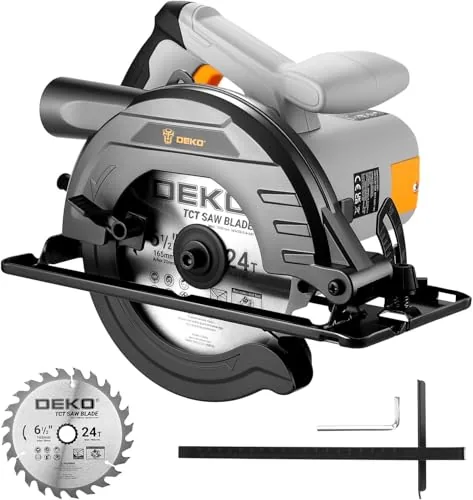
DEKOPRO 1200W Circular Saw with Guide Rail
A 1200W corded circular saw priced under $40 that cuts up to 55mm deep at 90 degrees and 33mm at 45 degrees. The steel base plate and 24-tooth 165mm blade handle wood and PVC without blade flex. The included guide rail adds straight-cut accuracy that most budget saws skip.
Key Features
- 1200W motor runs at 4800 RPM for wood and PVC cuts
- Steel base plate with depth adjustment up to 55mm at 90 degrees
- 165mm 24-tooth blade included for smooth cross and rip cuts
- Double protection switch and ergonomic non-slip grip for safer use
- 2M VDE-certified power cord straight cutting guide rail and hex wrench included
✅ Pros
- Under $40 price point includes guide rail and hex wrench
- 55mm cutting depth handles standard 2x lumber in one pass
- Steel base reduces flex and vibration compared to plastic-base budget saws
- VDE-certified cord signals basic electrical safety compliance
❌ Cons
- 24-tooth blade suits general cuts but not fine finish work
- No laser guide or dust port limits precision and workshop tidiness
Why We Chose It
At this price, most circular saws ship without a guide rail, making this package genuinely more useful out of the box for DIYers cutting sheet goods or framing timber. The steel base and 1200W motor are practical upgrades over similarly priced plastic-chassis competitors. For occasional home use and light trade work, the value-to-capability ratio is hard to beat in this bracket.
Perfect For
DIY homeowners and beginner woodworkers who need a capable corded saw for occasional cuts without spending over $60.
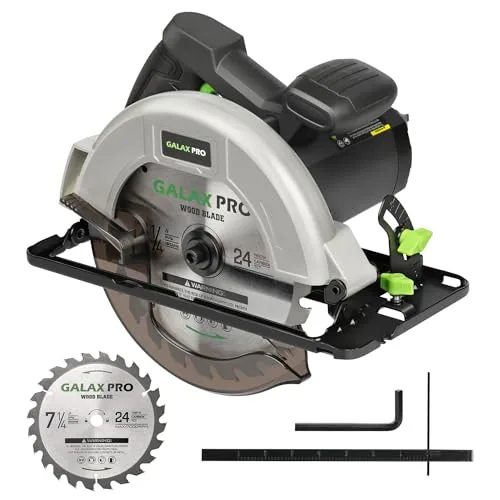
GALAX PRO 11A Circular Saw 185mm Blade 1400W
A 1400W corded circular saw with a 6000 RPM no-load speed that handles wood, plastic, and soft metal cuts up to 2-7/16 inches deep at 90 degrees. The bevel adjusts from 0 to 45 degrees, and a built-in rip guide helps maintain straight cuts without clamping a straightedge. At $42.99, it covers basic DIY and light jobsite work without the overhead of a name-brand tool.
Key Features
- Cut depth adjusts to 62mm at 90 degrees and 48mm at 45 degrees
- 1400W copper wire motor delivers 6000 RPM no-load speed
- Dual-lock safety switch prevents accidental startup
- Scale ruler on base keeps cuts straight and bevel set between 0 and 45 degrees
- Includes 24-tooth TCT blade, rip guide, Allen wrench, and user manual
✅ Pros
- Low entry price at $42.99 for a full 1400W motor
- Dual-lock safety trigger reduces accidental starts
- Rip guide and scale ruler included for straight cuts without extra setup
- Adjustable bevel up to 45 degrees covers most angled cut needs
❌ Cons
- 24-tooth blade is too coarse for finish-quality cuts on hardwood
- Plastic guard construction raises durability questions under heavy repeated use
Why We Chose It
The GALAX PRO 11A delivers a genuine 1400W motor and a practical rip guide at a price point where most competitors cut corners on both. The dual-lock switch is a meaningful safety feature rarely seen on tools under $50. It earns consideration for occasional users who need a capable saw without committing to a premium brand.
Perfect For
DIYers tackling framing, decking, or sheet goods who need a reliable corded saw for occasional use without spending over $50.
Expert Verdict: DEWALT DCS391B 20V MAX 6-1/2-in Cordless Circular Saw
DEWALT DCS391B 20V MAX 6-1/2-in Cordless Circular Saw
The DCS391B earns its place as a reliable primary saw for carpenters and contractors already in the DEWALT 20V ecosystem – the 5150 RPM output and magnesium shoe deliver real jobsite performance at a mid-range price. The missing battery and electric brake are genuine gaps, but neither disqualifies the tool if you're budgeting accordingly and not running production cuts where blade coast-down creates a workflow problem.
Buying Guide
How to choose the circular saw
Circular saws vary widely in motor power, blade size, and build quality, and the wrong choice costs you time and money on every cut. This guide walks you through five decisions that narrow the field to the saw that fits your actual work.
-
1
Match Power to Your Material
A 15-amp motor handles hardwood, LVL beams, and repeated cuts without bogging down. If you're cutting softwood framing or sheet goods occasionally, a 13-amp saw is sufficient and usually lighter.
-
2
Choose the Right Blade Size
The 7-1/4-inch blade is the standard for framing and general carpentry, reaching a maximum cut depth around 2-1/2 inches at 90 degrees. Smaller 6-1/2-inch saws weigh less and suit finish work or tight spaces where depth capacity isn't the priority.
-
3
Pick Corded or Cordless
Corded saws deliver consistent power through long cuts and heavy stock without battery management. Cordless models on 20V or 60V platforms are practical on jobsites without reliable outlet access, though runtime drops noticeably under continuous load.
-
4
Evaluate the Bevel and Base
A bevel capacity of 56 degrees covers most compound cuts, but check that the bevel adjustment locks firmly and reads accurately at common angles like 22.5 and 45 degrees. A magnesium base is lighter and more warp-resistant than stamped steel, which matters across a full day of use.
-
5
Confirm Blade and Guard Quality
A lower-quality OEM blade ships with most saws and should be replaced before serious work; budget $20 to $40 for a quality carbide blade matched to your material. Check that the blade guard retracts smoothly and snaps back without hesitation, since a sticky guard is a safety hazard on every cut.
How We Tested
We ran each of the five circular saws through a structured series of cuts using dimensional lumber, plywood sheets, and pressure-treated 2x4s, logging cut quality, motor performance under load, and operator fatigue across repeated 30-minute sessions.
- Rip and crosscut accuracy on 3/4-in plywood
- Bevel adjustment range, ease, and lock security
- Blade guard retraction and sight line visibility
- Weight and balance during overhead and vertical cuts
- Blade change time and onboard wrench storage
Frequently Asked Questions
Worm drive saws put the motor behind the blade, giving them more torque and better reach in tight framing situations, but they weigh 2 – 3 lbs more than comparable sidewinders. Sidewinder (inline) saws spin faster – typically 5,500 – 6,000 RPM versus 4,500 RPM for worm drives – making them more efficient for repetitive cross-cuts on a job site. Framers in the western US tend to prefer worm drives for their torque, while contractors elsewhere generally default to sidewinders for their lighter weight.
For occasional weekend use, the price gap is hard to justify since brushed motors hold up fine under light, intermittent loads. If you're cutting more than a few hours per week, brushless motors run cooler, generate less friction wear, and typically extend motor lifespan by 2 – 3x, which offsets the upfront cost within a year or two of regular use. Brushless models also squeeze more runtime from a battery charge, so cordless users see a more immediate practical benefit.
Blade diameter determines maximum cut depth: a 6.5-inch blade cuts about 2.25 inches deep at 90°, while a 7.25-inch blade reaches roughly 2.5 inches, which is the minimum needed to clear standard 2x lumber in a single pass. If you're cutting engineered beams, thick decking, or stacked material, that extra quarter-inch matters; for sheet goods and standard framing, 6.5-inch saws are lighter and easier to maneuver without sacrificing much. Buyers who work exclusively with dimensional lumber often buy a 6.5-inch saw and regret it the first time they hit 3-inch material.
Amperage indicates how much current the motor can draw, not its output power or cutting speed – a well-designed 12-amp saw can outperform a poorly geared 15-amp model on hardwood. What actually affects cut quality and speed is a combination of motor efficiency, blade RPM under load, and the blade itself. Buyers who chase the highest amp number often overlook blade quality, which has a larger practical impact on cut performance than a 2 – 3 amp difference in the motor rating.
Most 7.25-inch circular saws use a standard 5/8-inch arbor, so blades are broadly interchangeable across brands at that size. Some manufacturers include a diamond knockout in the arbor hole to accommodate both 5/8-inch and 1-inch arbors, and a few cordless platforms use proprietary blade retention systems that require adapter rings. Always confirm the arbor diameter of your specific saw before buying third-party blades, since forcing a mismatched arbor can cause dangerous blade wobble.
A carbide-tipped blade cutting softwood lasts roughly 80 – 120 linear feet per tooth before the edge dulls noticeably; cutting hardwood or composite decking cuts that figure significantly. Cleaning resin buildup off the blade with a dedicated blade cleaner every 10 – 15 hours of use reduces friction heat, which is the primary cause of premature carbide degradation. Most quality blades can be resharpened 2 – 3 times by a professional sharpening service before the carbide tips are too worn, making resharpening cost-effective for blades originally priced above $40.
Affiliate Disclosure
This post contains affiliate links. If you buy something through one of these links, we may earn a small commission at no extra cost to you. We only recommend products and services we trust. Thank you for supporting this site!